
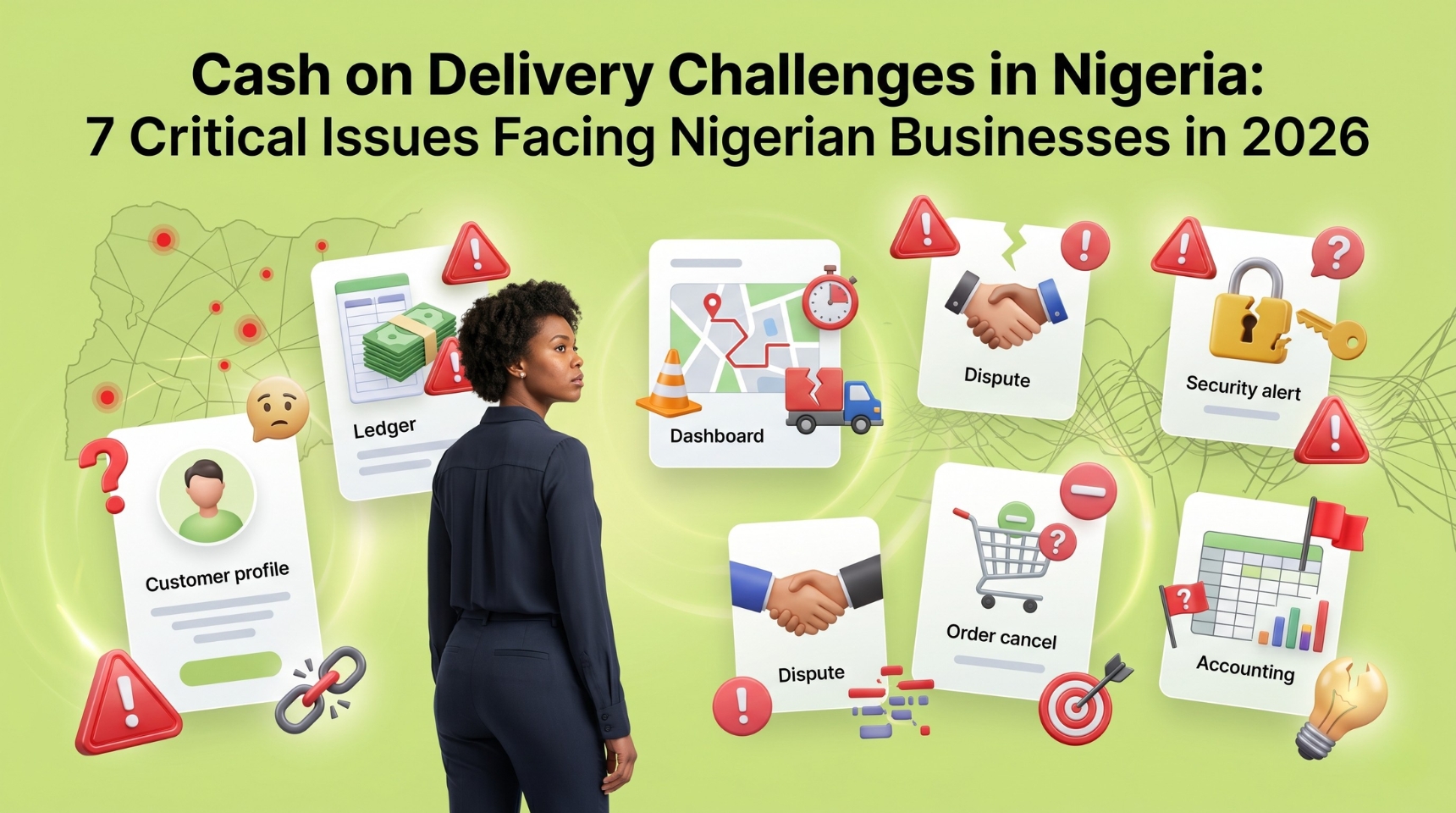

Cash on delivery (COD) continues to dominate Nigeria's eCommerce landscape in 2026, accounting for over 70% of online transactions across Lagos, Abuja, Port Harcourt, and other major cities. While digital payment adoption is growing, most Nigerian consumers still prefer paying cash when their orders arrive.
For business owners, this creates a complex web of operational challenges that can significantly impact profitability and growth.
If you're running an online store or logistics business in Nigeria, understanding these cash on delivery challenges in Nigeria is essential for building sustainable operations.
This comprehensive guide explores the seven most critical COD challenges facing Nigerian businesses today and provides actionable solutions you can implement immediately.
1. Cash Reconciliation and Remittance Delays
The Reality of COD Cash Flow
One of the most frustrating cash on delivery challenges in Nigeria is the delay between when customers pay and when business owners actually receive their money.
Unlike card payments that settle within 24–48 hours, COD payments often take 3–7 days or longer to reach your business account.
Typical scenario:
Monday: Agent collects ₦50,000
Wednesday: Total collections reach ₦150,000
Friday or next week: You finally receive the money
Common Reconciliation Problems
Manual tracking errors: Incorrect entries or forgotten payments
Delayed remittances: Agents prioritize deliveries over cash submission
Unclear payment trails: Difficult to match cash to specific orders
Practical Solutions
Implement digital COD tracking via mobile apps
Enforce strict remittance schedules (daily or twice weekly)
Encourage direct bank transfers from agents
NovatraCloud's remittance system allows real-time logging and automatic reconciliation, eliminating guesswork.
2. High Rate of Failed Deliveries and Return Costs
The True Cost of COD Rejections
COD orders have a 15–25% failure rate in Nigerian cities.
Each failed delivery costs:
Initial attempt: ₦500–₦1,500
Return logistics: ₦500–₦1,500
Second attempt: ₦500–₦1,500
Staff time and handling
Monthly impact example:
200 orders × 20% failure = 40 failed deliveries
Loss: ₦40,000–₦120,000 monthly
Why COD Fails More
No upfront financial commitment
Customers change their minds
Delivery delays reduce urgency
Reducing Failed Deliveries
Send WhatsApp confirmation before delivery
Collect detailed address + landmarks
Introduce small deposits for high-value orders
Automation tools like NovatraCloud reduce failed deliveries by up to 40%.
3. Security Risks and Cash Theft
The Vulnerability of Carrying Cash
Delivery agents often carry ₦100,000–₦200,000+, making them targets for theft.
Internal Theft Risks
False robbery claims
Small undetected skimming
Unverified cash discrepancies
Mitigating Security Risks
Enforce daily remittance
Use GPS tracking for accountability
Provide insurance for riders and goods
Real-time tracking creates an auditable trail that protects both business and agents.
4. Cash Flow Management Complications
The Working Capital Trap
You spend money upfront but receive revenue later.
Example:
Inventory cost: ₦500,000
Orders shipped: ₦400,000
Cash still with agents
Result: Cash shortage despite strong sales.
Solutions
Maintain 7–14 days working capital buffer
Incentivize prepaid orders
Use dashboards to track cash-in-transit
Even converting 20% of customers to prepaid improves liquidity significantly.
5. Agent Accountability and Performance Tracking
The Challenge of Distributed Teams
Managing multiple riders without systems leads to:
Poor accountability
Disputes
Inefficiency
Key Metrics to Track
Delivery success rate (target: 85%+)
Daily deliveries
Remittance punctuality
Customer feedback
Cash accuracy
Practical Approach
Use performance dashboards
Reward top-performing agents
Train underperforming ones
Data-driven management replaces guesswork.
6. Customer Trust and Verification Issues
The Legitimacy Problem
COD shifts trust risk from customer to business.
Customer Verification Steps
Confirm phone numbers
Validate addresses
Call for high-value orders
Track order history
Build Customer Profiles
Identify loyal vs risky customers
Reward repeat buyers
Restrict COD for unreliable customers
Smart verification reduces fraud and failed deliveries.
7. Operational Complexity and Resource Drain
The Hidden Administrative Burden
COD requires:
Cash matching
Agent reconciliation
Dispute resolution
Cash handling
Reporting
This can consume 15–20 hours monthly for SMEs.
Automating COD Management
Modern systems:
Auto-match payments to orders
Flag discrepancies
Generate reports instantly
Provide real-time dashboards
NovatraCloud reduces admin workload by up to 80%.
Moving Forward: Smart COD Management for Nigerian Businesses
COD challenges are real—but manageable.
Successful businesses in 2026:
Use automation tools
Enforce clear processes
Track performance metrics
Optimize continuously
Your COD Strategy Should Include:
Technology for automation
Clear agent policies
Customer verification
Cash flow planning
Security systems
Balanced payment options
Data-driven improvements
Take Control of Your COD Operations Today
If you're facing COD challenges, the solution is not avoiding COD—it's managing it properly.
NovatraCloud provides:
Order management
Agent tracking
WhatsApp notifications
COD reconciliation
Real-time dashboards
Ready to eliminate COD chaos and scale your business?
Start your free trial today:
👉 https://novatracloud.com
No credit card required.