
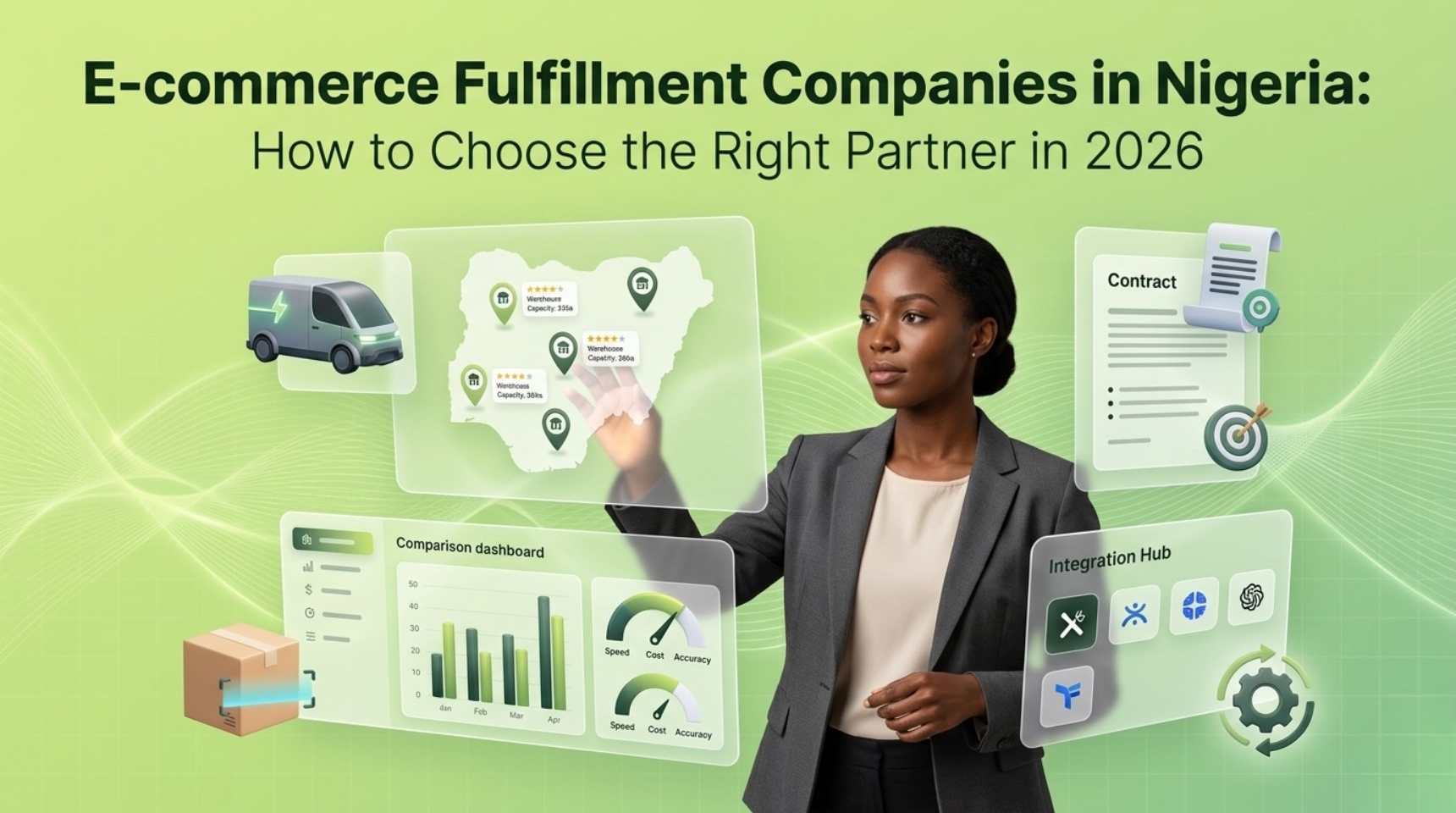

As Nigerian e-commerce continues its explosive growth—projected to reach $12 billion by 2025—business owners face a critical decision: how to handle order fulfillment efficiently.
Whether you’re shipping 50 packages monthly from your Ikeja warehouse or managing 500 deliveries across Lagos, Rivers, and Abuja, partnering with the right e-commerce fulfillment companies in Nigeria can make or break your business.
But here’s the challenge:
Nigeria’s fulfillment landscape is fragmented.
Some businesses struggle with unreliable third-party logistics providers, while others find that outsourcing removes too much control from their operations.
This guide will help you:
Navigate fulfillment options
Understand what to look for in partners
Decide between outsourcing vs in-house systems
Understanding E-commerce Fulfillment in the Nigerian Context
E-commerce fulfillment includes:
Receiving inventory
Warehousing
Picking and packing
Delivery
Returns management
In Nigeria, this process comes with unique challenges.
The Nigerian Fulfillment of Challenge
Nigerian e-commerce businesses face:
Address verification issues
Many locations (Ajah, Sangotedo, parts of mainland Lagos) lack structured addressingCash collection complexity
Over 80% of customers prefer cash-on-deliveryLast-mile delivery costs
Traffic and poor infrastructure increase costsCustomer communication preferences
WhatsApp dominatesReturns management challenges
High return rates require efficient reverse logistics
Types of E-commerce Fulfillment Companies in Nigeria
1. Traditional Logistics Companies
Examples: GIG Logistics, Kwik Delivery, CourierPlus
Advantages:
Established delivery networks
Existing warehousing infrastructure
Strong brand trust
Disadvantages:
Limited tech integration
Not tailored for e-commerce
Higher delivery costs (₦800–₦2,500 within Lagos)
Low transparency on rider performance
2. Tech-Enabled Fulfillment Startups
Examples: SendBox, Heroshe, DropShop
Advantages:
Tracking dashboards
API integrations
Competitive pricing
E-commerce focus
Disadvantages:
Limited coverage
Inconsistent service quality
Reliance on third-party riders
3. In-House Fulfillment with Management Software
Many businesses now build internal delivery teams.
Advantages:
Full operational control
Direct customer relationships
Better margins
Flexibility
Disadvantages:
Requires management effort
Rider hiring challenges
Need for systems
This is where platforms like NovatraCloud become essential.
Key Features to Look for in Fulfillment Solutions
Cash Collection & Reconciliation
Digital logs per delivery
Automated reconciliation
Rider accountability tracking
Daily settlement visibility
Discrepancy alerts
👉 Improves accountability by 15–30%
WhatsApp Integration
Automated order updates
Two-way communication
Delivery confirmations
Feedback collection
Performance Analytics
Delivery success rates
Average delivery times
Cost per delivery
Customer satisfaction
Failure reasons
Outsourced vs In-House Fulfillment: How to Choose
Choose Outsourced Fulfillment If:
You have < 50 monthly deliveries
You sell bulky or fragile items
You’re testing new locations
You lack warehouse space
You have limited capital
Choose In-House Fulfillment If:
You have 100+ monthly deliveries
Your margins are tight
Customer experience matters deeply
You need operational flexibility
Deliveries are geographically concentrated
Hybrid Model (Recommended)
Many businesses:
Handle urban deliveries in-house
Outsource interstate deliveries
Cost Analysis: What to Expect
Outsourced Fulfillment Costs
Lagos: ₦3,000–₦7,000
South: ₦3,000–₦6,000
North:₦2,500–₦5,000
Interstate Logistics: ₦2,500–₦5,000
Other costs:
Warehousing: ₦15,000–₦80,000/month
Pick & Pack: ₦150–₦400/order
Failed deliveries: ₦100–₦3,000
COD fees: 1–3%
In-House Fulfillment Costs
Setup:
Motorcycle: ₦400,000–₦1,500,000
Equipment: ₦30,000–₦50,000
Registration: ₦80,000–₦120,000
Monthly per rider:
Salary: ₦50,000–₦80,000
Fuel: ₦30,000–₦50,000
Maintenance: ₦10,000–₦20,000
Data: ₦5,000–₦8,000
Software: ₦15,000–₦35,000
👉 Cost per delivery: ₦600–₦1,200
Red Flags When Choosing Fulfillment Partners
Poor Communication
Slow responses
No real-time updates
Hidden Pricing
Watch for:
Failed delivery fees
COD charges
Storage fees
Fuel surcharges
Weak Cash Reconciliation
Delayed settlements
Lack of transparency
Fake Coverage Claims
Outsourced to unreliable third parties
No Performance Guarantees
No delivery success benchmarks
No compensation for failures
The Technology Advantage
Automation
Auto dispatching
Route optimization
Cash calculations
Customer notifications
👉 Reduces admin time by 40–60%
Data Insights
Rider performance tracking
Delivery zone analytics
Time-based delivery insights
Cost breakdowns
Scalability
Easy rider onboarding
Consistent service quality
Efficient growth from 100 → 500 deliveries
Decision Framework
Step 1: Delivery Economics
Monthly volume
Order value
Margins
COD percentage
Step 2: Operational Capacity
Team capability
Space availability
Tech readiness
Capital
Step 3: Customer Experience
Delivery speed importance
Communication expectations
Retention impact
Step 4: Test & Optimize
Start hybrid
Track KPIs
Adjust monthly
Conclusion: Taking Control of Your Fulfillment Future
Choosing fulfillment isn’t just operational—it’s strategic.
It impacts:
Profit margins
Customer satisfaction
Scalability
Key Insight
Most growing Nigerian e-commerce businesses eventually realize:
👉 In-house fulfillment + technology = best long-term advantage
Ready to Transform Your Delivery Operations?
NovatraCloud gives you:
WhatsApp AI automation
Cash collection management
Rider/Agent performance analytics
🚀 Start your free 7-day trial
No credit card required
Full feature access
Onboarding support within 48 hours
Stop losing money to:
Expensive fulfillment companies
Chaotic manual delivery systems
Take control with NovatraCloud.