
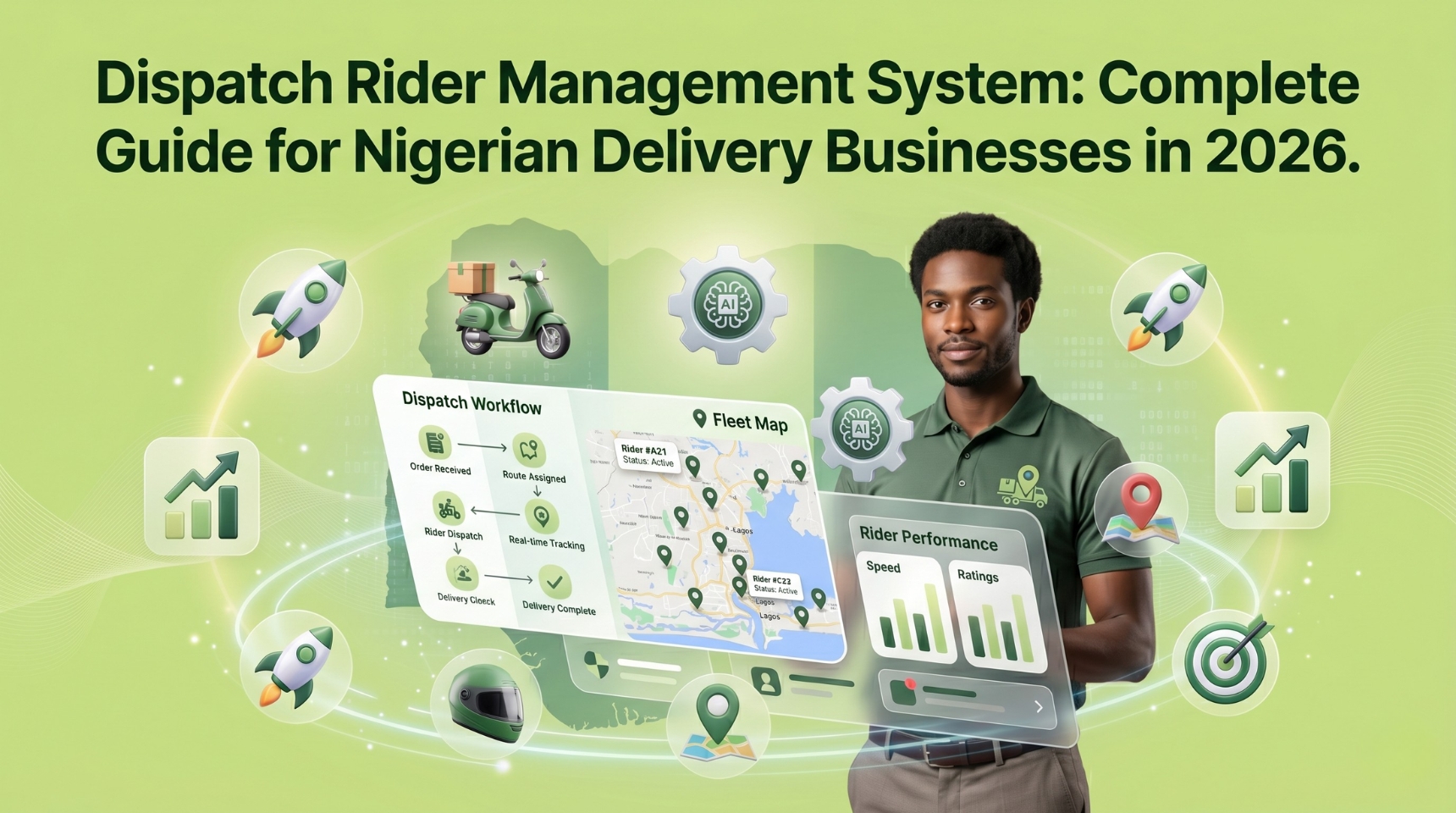

Managing dispatch riders in Nigeria's fast-paced delivery environment is no small feat. Between coordinating multiple delivery agents across Lagos traffic, tracking cash-on-delivery collections, and ensuring customers receive timely updates, many business owners find themselves overwhelmed.
A dispatch rider management system offers the solution—digital tools designed to streamline every aspect of your delivery operations, from order assignment to performance tracking.
For Nigerian eCommerce businesses and logistics companies handling 50 to 500 deliveries monthly, the right system can mean the difference between chaotic operations and profitable growth.
This comprehensive guide explores everything you need to know about dispatch rider management systems, specifically tailored to the Nigerian business context.
What Is a Dispatch Rider Management System?
A dispatch rider management system is software that helps businesses coordinate, monitor, and optimize their delivery operations.
Think of it as your digital operations manager—tracking every delivery agent, monitoring their performance, managing cash collections, and providing real-time visibility into your entire delivery network.
Core Components of Modern Dispatch Systems
Today's effective systems combine several critical elements:
Order Assignment and Tracking
Automatically assign deliveries to the right riders based on location, capacity, and availability. GPS-based delivery tracking ensures you know exactly where each package is at any moment.
Agent Performance Analytics
Monitor key metrics like delivery success rates, average delivery times, and customer feedback. This data helps you identify your best performers and address issues with struggling riders.
Cash Reconciliation Tools
For Nigerian businesses where COD remains dominant, systems must include robust cash-on-delivery collection and reconciliation features. This eliminates the manual spreadsheet tracking that leads to discrepancies and delayed remittances.
Communication Integration
WhatsApp-integrated customer notifications keep buyers informed without requiring constant manual updates from your team or riders.
Why Nigerian Delivery Businesses Need Dedicated Rider Management
The delivery landscape in Nigeria presents unique challenges that generic management tools simply can't address effectively.
The COD Reconciliation Challenge
Cash-on-delivery accounts for over 70% of eCommerce transactions in Nigeria currently. Without proper systems, tracking who collected what, when remittances are due, and reconciling accounts becomes a daily nightmare.
Business owners often discover shortfalls days or weeks later, creating cash flow problems and strained relationships with delivery agents.
A proper dispatch rider management system automates this process. Riders mark payments as collected in real-time, the system tracks outstanding remittances, and business owners can see their cash position instantly—no more WhatsApp messages asking:
"Oga, which deliveries you don collect money for?"
Scaling Beyond the "One Trusted Rider" Model
Many Nigerian businesses start with one or two trusted dispatch riders they manage through phone calls and WhatsApp. This works fine for 20–30 deliveries weekly.
But as your business grows to 100+ deliveries, the informal approach breaks down.
You need:
Visibility into who's handling what
Performance data to identify bottlenecks
Standardized processes that don’t depend on personal relationships
Managing Multi-Location Operations
Businesses expanding beyond a single warehouse or serving customers across multiple Lagos neighborhoods need systems that support multi-location inventory management.
Your dispatch system should:
Know which warehouse has stock
Assign riders accordingly
Prevent costly cross-city pickups
Essential Features to Look for in 2026
Not all dispatch rider management systems are created equal, especially for Nigerian business needs. Here's what actually matters:
Real-Time GPS Tracking and Route Optimization
GPS tracking provides:
Customer transparency
Operational control
Customers can see their delivery approaching, while you verify rider activity.
Better routing =
More deliveries per day + lower fuel costs + higher profits
Comprehensive Agent Performance Analytics
Your system should track:
Delivery success rate
Average delivery time by area
Customer ratings and feedback
COD collection accuracy
Deliveries completed per rider
This data helps optimize performance and reward top agents.
Flexible Role-Based Access Control
Different team members need different access levels:
Owner/Admin: Full control
Customer Service: Order tracking & updates
Riders: Assigned deliveries & status updates
This prevents confusion and protects sensitive data.
Automated Remittance Management
Manual tracking leads to disputes and confusion.
A good system should:
Automatically calculate rider balances
Track remittances
Flag overdue payments
Integrate payment verification (e.g., Paystack)
Bulk Order Processing
Stop wasting hours on manual entry.
Bulk import allows you to:
Upload 50–200 orders instantly
Automatically parse customer data
Assign deliveries faster
How Dispatch Management Systems Transform Daily Operations
Morning Order Assignment
Without a system:
45 minutes on calls and WhatsApp
Uneven workload distribution
With a system:
Smart auto-assignment
Instant rider notifications
Done in 10 minutes
Midday Customer Inquiries
Without a system:
Endless calls between customer and rider
With a system:
Real-time dashboard
Instant answers
60% fewer inquiries
End-of-Day Reconciliation
Without a system:
Manual calculations
Discrepancies and stress
With a system:
Real-time cash tracking
Accurate reports
Zero guesswork
Choosing the Right System for Your Nigerian Business
Consider Your Business Model
eCommerce businesses → Need inventory + order + delivery integration
Logistics companies → Need multi-client management
Choose a system that supports both if you plan to scale.
Evaluate Integration Capabilities
Your system should connect with:
E-commerce platforms
Payment gateways (Paystack, Flutterwave)
WhatsApp (non-negotiable)
Inventory/accounting tools
Assess Local Context Understanding
Ensure the system supports:
COD workflows
Nigerian address formats
WhatsApp communication
Naira reporting
Lagos traffic realities
Calculate Total Cost of Ownership
Consider:
Subscription cost
Training time
Setup complexity
Cost of inefficiency without a system
Most SMEs save 2–3x their investment monthly.
Implementation Best Practices
Start with a Pilot Program
Test with 2–3 riders for 2 weeks before full rollout.
Invest in Proper Training
Keep it simple
Use visual guides
Assign a support person
Set Clear Expectations
Communicate benefits:
Faster payments
Fair performance tracking
Fewer disputes
Monitor and Optimize
Review performance weekly and improve continuously.
Common Mistakes to Avoid
Choosing complexity over usability
Ignoring mobile experience
Poor change management
Neglecting data security
The Future of Dispatch Management in Nigeria
Expect:
AI route optimization
Predictive delivery analytics
Deeper system integrations
Businesses adopting early will scale faster and dominate.
Transform Your Delivery Operations Today
A dispatch rider management system is not just software—it's your growth engine.
It eliminates chaos, improves efficiency, and gives you full control over your delivery operations.
NovatraCloud provides:
GPS tracking
COD reconciliation
WhatsApp notifications
Performance analytics
—all built for Nigerian businesses.
Ready to streamline your delivery operations?
👉 Start your free trial today: https://novatracloud.com/signup
No credit card required. See results within your first week.